
Hidden Gems

As we stepped into the library, we were immediately overwhelmed. The shelves were packed tight with old, dusty books—many stamped with the words “DISCARD” or “REJECT.” As we moved through the stacks, we came across titles from the 1920s, pages yellowed with age, information long outdated, and some books missing their covers entirely.
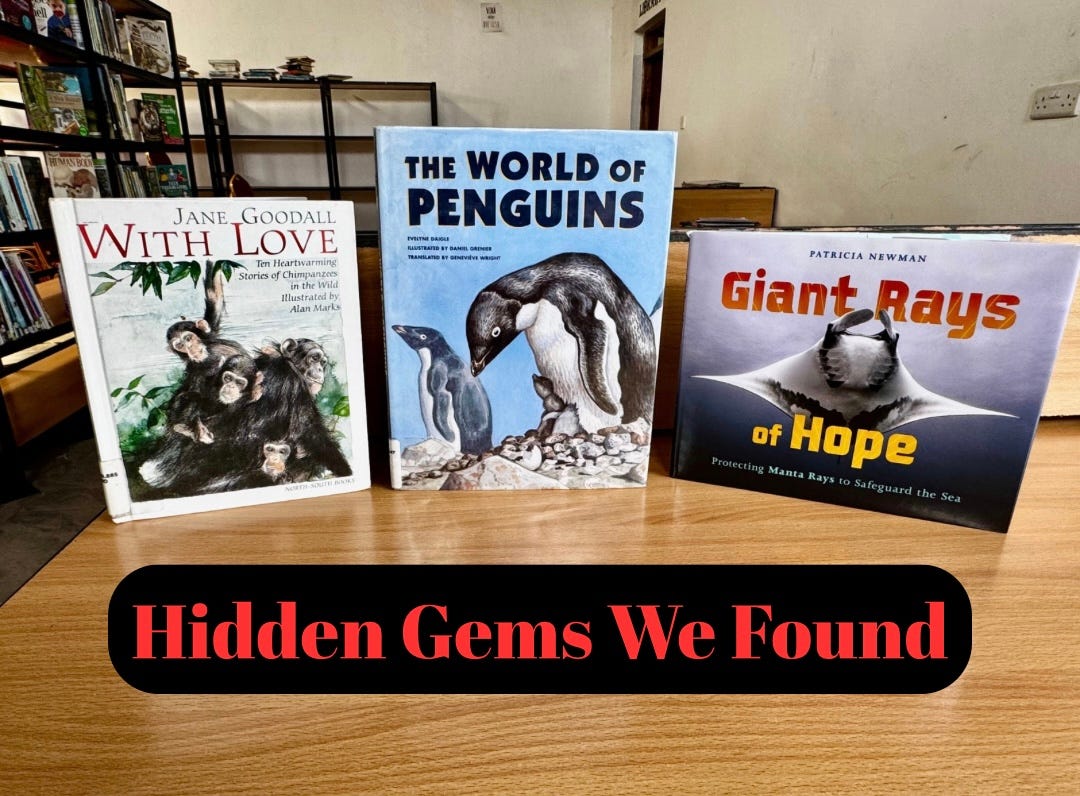
But as we looked closer, we began to find hidden gems like Hidden Figures and a few newer nonfiction titles. The challenge was that these treasures were buried beneath layers of unusable material, making them difficult to find.
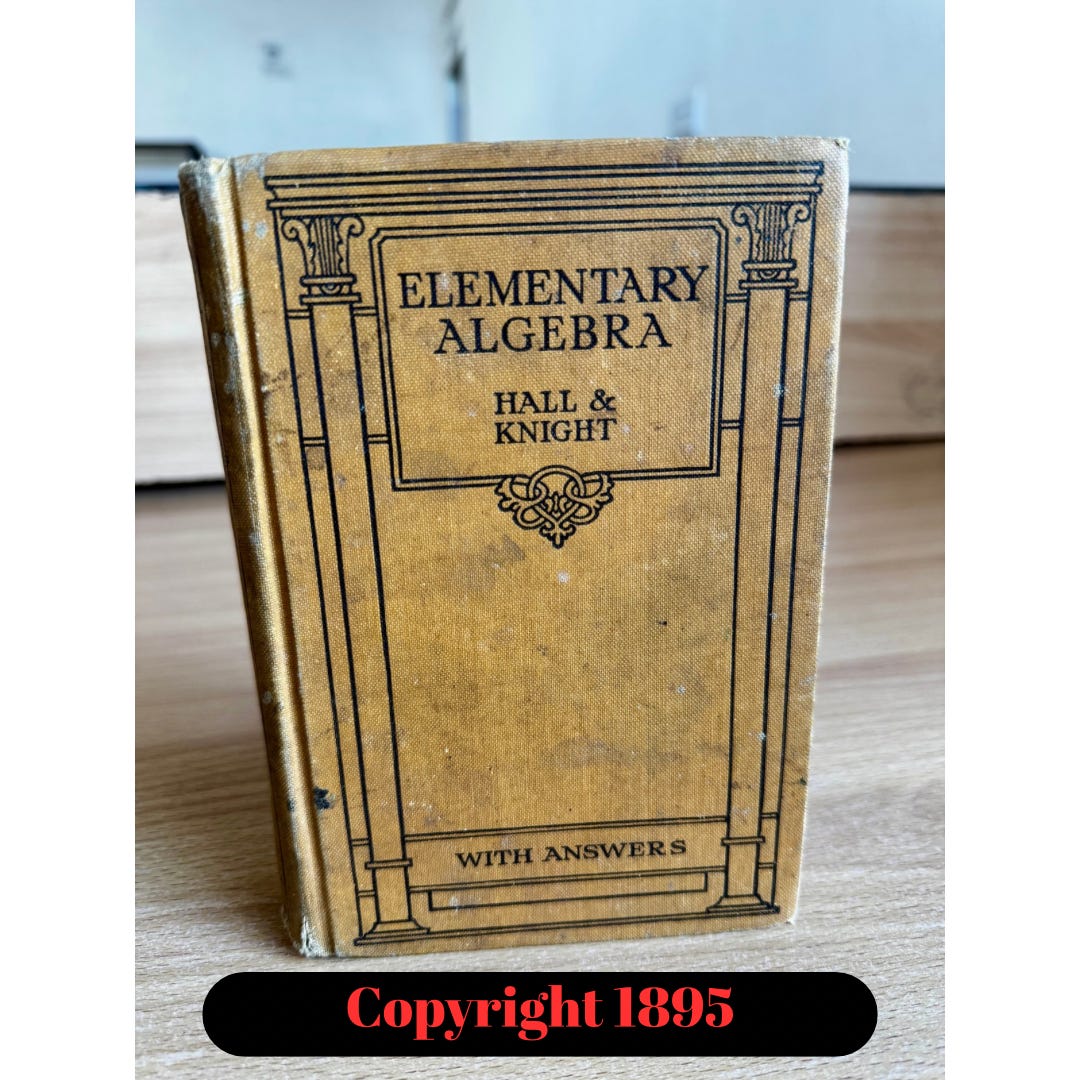
Most of the books here are U.S. discards—titles like How to Use Windows 95 and poetry collections from the 1930s. We even found an elementary algebra book with a copyright date of 1895. The school accepted them with gratitude, because they’re thankful for any resources. But the reality is that much of what fills the shelves is outdated, dilapidated, and unusable.
We believe these donations are offered with kind intentions. And yes, there are sometimes real treasures hidden among them. But it raises a broader and important question: Why is it considered acceptable to send broken, discarded materials, often explicitly marked as such, to under-resourced schools or communities in crisis? What message does that send to the students who receive them?
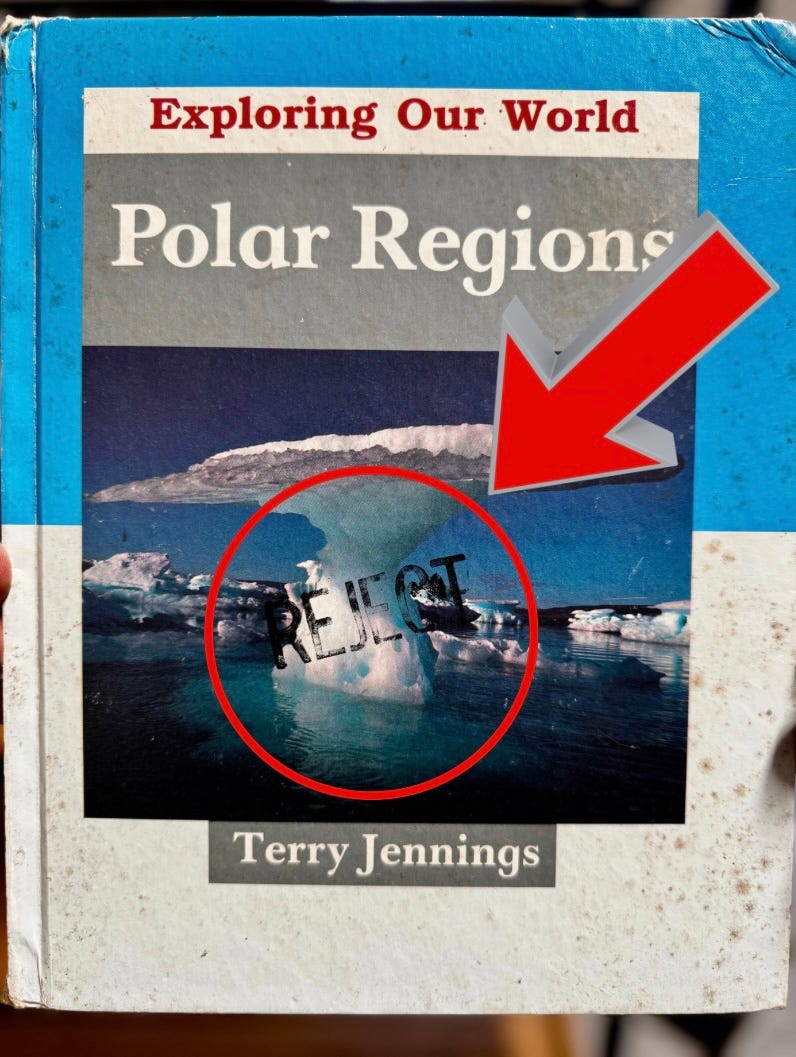
We can’t help but wonder how it feels for a child to open a book stamped “DISCARD” or “REJECTED.” Does it unintentionally communicate that they’re not worthy of better?
We arrived with several suitcases full of donated books—generously given by individuals or purchased through our Amazon wishlist. After carefully weeding through the existing collection, we displayed both these new additions and the hidden gems where the girls could easily see and access them.
As librarians, we often say our shelves are like gardens: we weed so the remaining books—like healthy plants—can flourish. Today, we finished reorganizing the general nonfiction section and began shelving and displaying the books. The smiles and excited chatter of students passing by the library made all the effort worth it—and we’ve only just begun.
Learn more about us and our journey at buildinglibraries.org